Making imaginary spaces shared
How I started from square zero to design Rust Wings' maps

Welcome to the worlds by watt newsletter. I’m watt, creator of the ecological science fantasy tabletop roleplaying game Cloud Empress.
Coming March 2026, I’m Kickstarting Rust Wings: Dystopian Adventure Roleplaying. play as misfit teens who build and pilot their own planes from the scrap around them. Follow Rust Wings here!
While the city I live in, Minneapolis, is being terrorized by a masked paramilitary force, I’m still trying to create art that brings community together and uncovers what it means to be human. Art and play give us reasons to live and examine our lives.
Over the next few months, I’ll be digging into my design process behind Rust Wings, my upcoming dystopian adventure game. Here’s part two of my design diary.
Making imaginary spaces shared
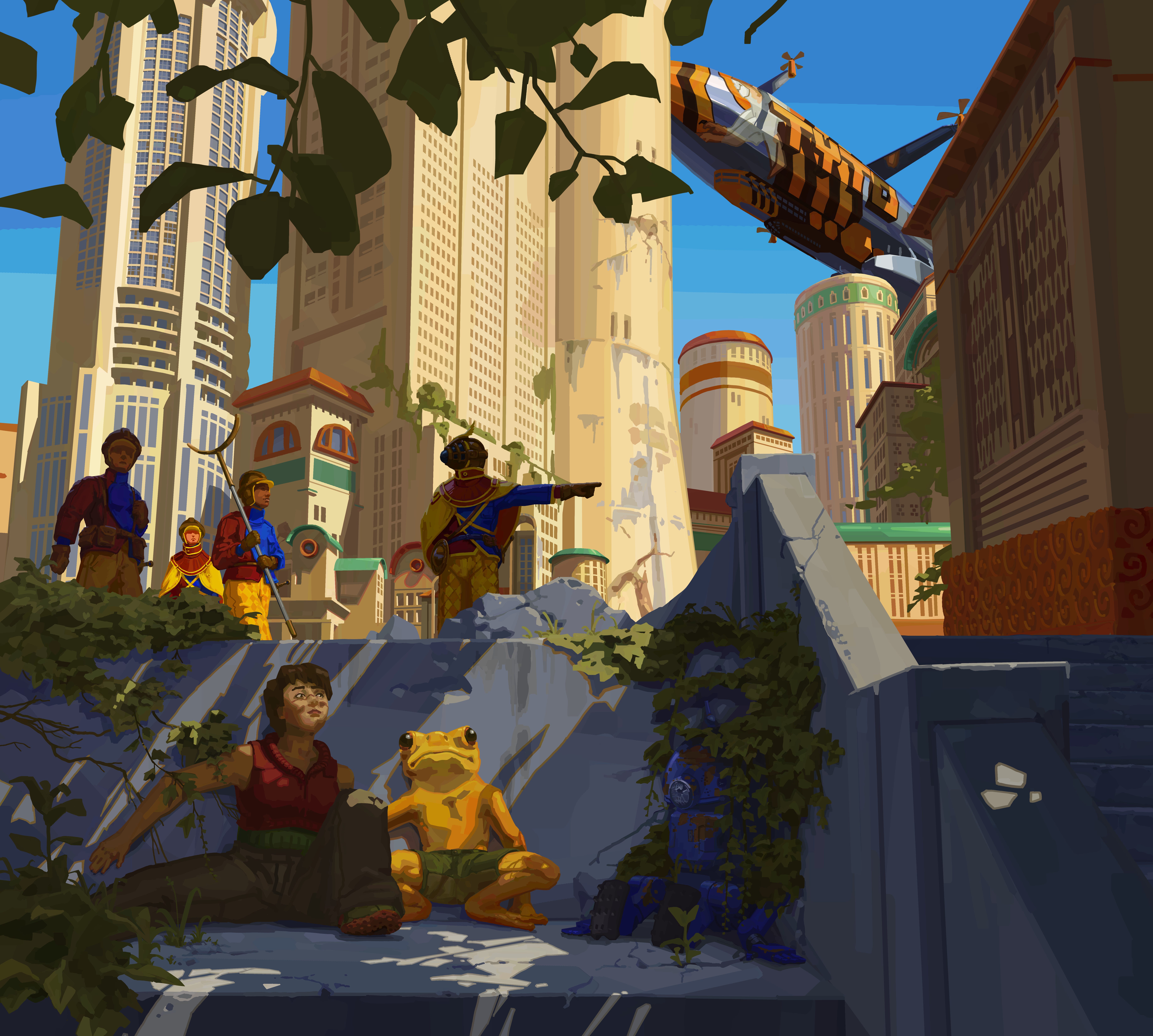
When I started playing tabletop roleplaying games, I was attracted to rules—or rather, I was afraid of the absence of rules. In my first sessions, I ran Pathfinder because I thought having a rule for everything might make the act of playing make-believe with my friends less embarrassing. I bought a giant whiteboard and scored the surface with an Exacto knife, and then used a marker to create a permanent grid for drawing maps and terrain on the fly. We counted squares, used miniatures, the whole D & D thing I had seen…somewhere? Why did they sell all those 4th edition minis if you didn’t need minis to play?
I didn’t play with that group for long. Sessions devolved into antagonistic matches where the players tried to construct the most broken builds imagineable and I antagonistically trapped them in impossible situations to try and balance their increasingly powerful builds and showcase my totally awesome Tengu bounty hunter (i.e., GM stand-in).
When I came back to roleplaying during the pandemic, I took the opposite approach. Excited by rules-lite OSR systems, I dove into the theater of the mind gameplay. I reveled in the freedom of not having to represent space, getting rid of the top-down grid map where play was beholden to tight measurements. In these groups, I played several sessions without any visual references. After one session where I drew up a hasty map to explain the entrances and exits to a library, one player rather sheepishly asked, “Could we play with more maps?” It turns out they had been getting a headache after each time we played. Balancing roleplaying with the navigation of a completely amorphous imaginary space was too much for them.
In this moment, I realized that the representation of space is a key component to the accessibility of a game. Navigating shared imaginary spaces is quite challenging. In some games, the specifics of the world around your character doesn’t quite matter, but when trying to solve a problem or evade capture, distances and shared perceptions really do.
With my upcoming game Rust Wings, I’ve created a system to encourage players to explore difficult terrain. I need to help the table understand the space around their characters. To start, I modeled space using three-dimensional children’s blocks. Fiddling with the blocks allowed me to create endless combinations of urban terrain, and in playtesting, helped players understand vertical features in a map.
At the same time I tested the block-based-terrain, I also ran games where players only used pictures of those block configurations. I found that even on flat/isometric images, players climbed, hid, and crawled across the world more than I’ve seen in sessions with top-down views.
So, what does a Rust Wing map look like now? The Rust Wings box set will include an entire spiral-bound player-facing map book.
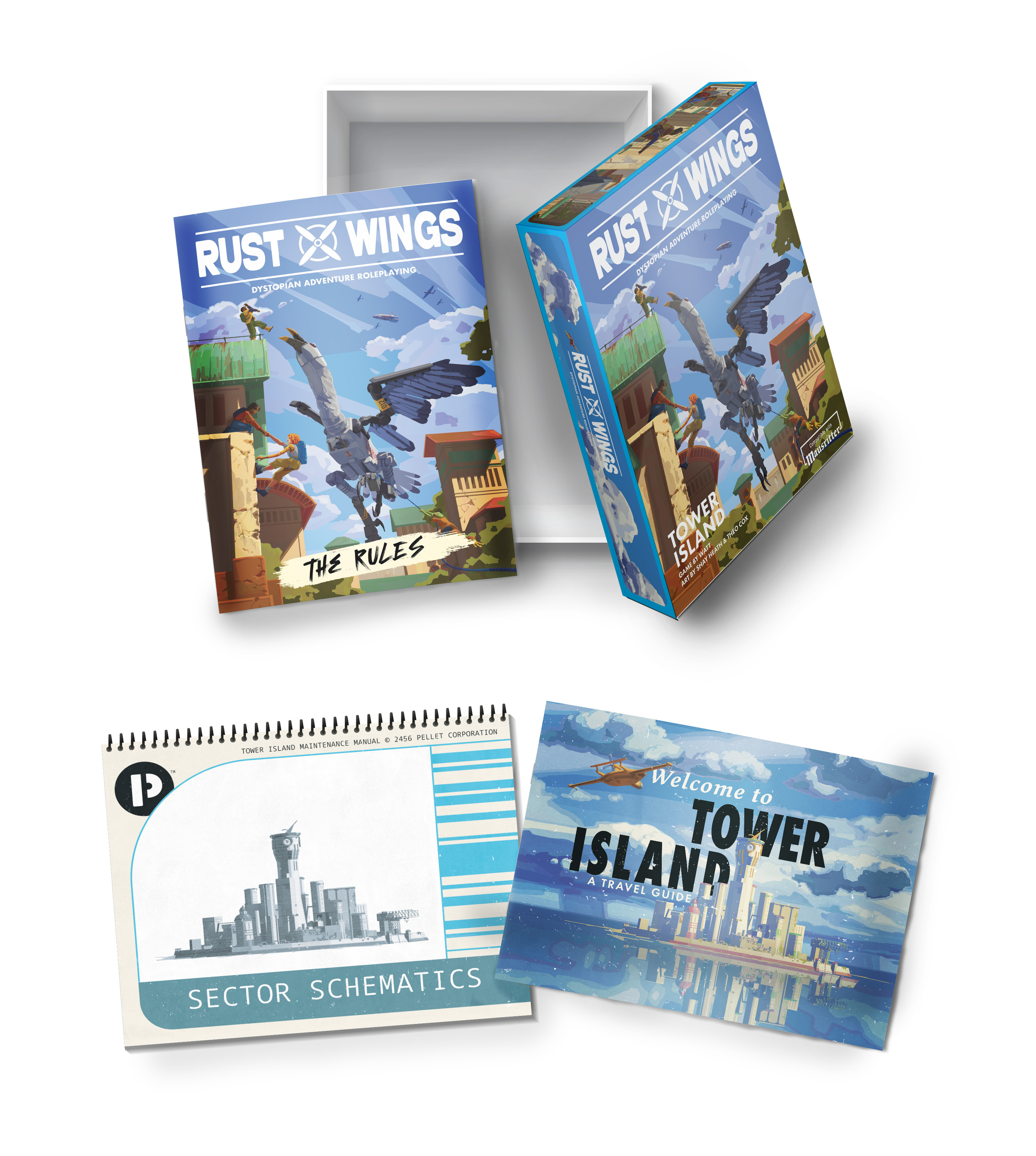
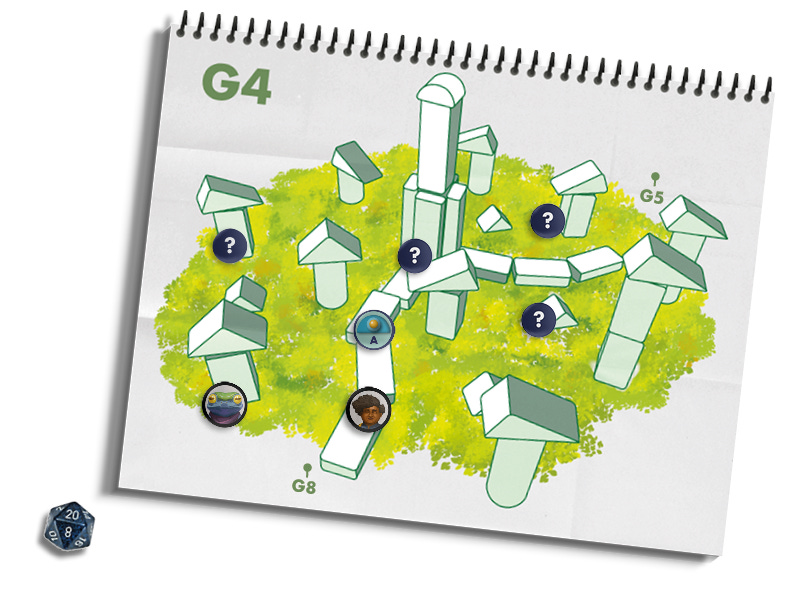
Rust Wings maps have a 90s-inspired isometric(ish) design. The setup allows groups to build locations using physical blocks or play directly on the 8.5 x 11-inch book using the game’s included punchboard tokens.
I’ve purposely used a polygon/block aesthetic in the design for two key reasons:
Using similar block shapes in the maps (as in a children’s block set) means game Guides can more easily reproduce the design on their table (if they choose).
I believe the 90’s aesthetic will be much easier to replicate for game Guides (and 3rd-party creators) to make their own maps!
The Guide uses the mapbook in conjunction with a second Tower Island setting book. The setting book provides information related to each location’s encounters, points of interest, and equipment present in a location, whereas the mapbook creates a shared sense of space for the players.
There’s a whole lot more I want to tell you about the setting book, but that will have to wait a couple of weeks. In the meantime…
Early bird Rust Wings reward
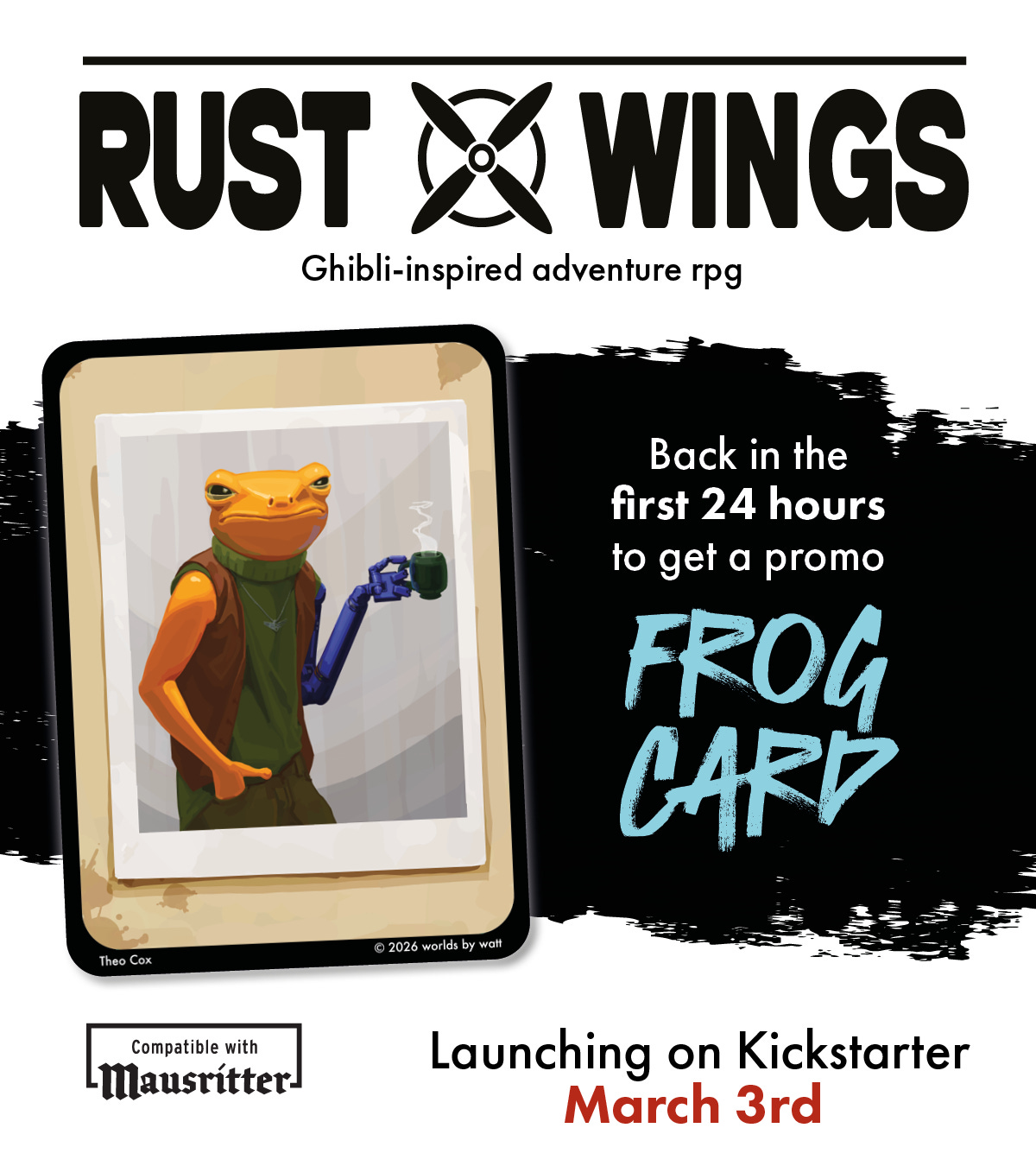
I’ve added an incentive to back Rust Wings early. Pledge your support in the first 24 hours to receive a promotional “grumpy frog” player portrait card.
Follow Rust Wings ahead of its launch on March 3rd!
📖 What I’ve been reading, watching, and playing
Saga by Brian K Vaughan and Fiona Staples
Sculpting in Time by Andrei Tarkovsky
Picket Line Tango (A Mothership adventure) by Emily Weiss
Thanks for subscribing to the worlds by watt newsletter!
For all things Cloud Empress go to CloudEmpress.com.
-watt
" I found that even on flat/isometric images, players climbed, hid, and crawled across the world more than I’ve seen in sessions with top-down views."
Fricking SOLD.
Love your creative and innovative designs